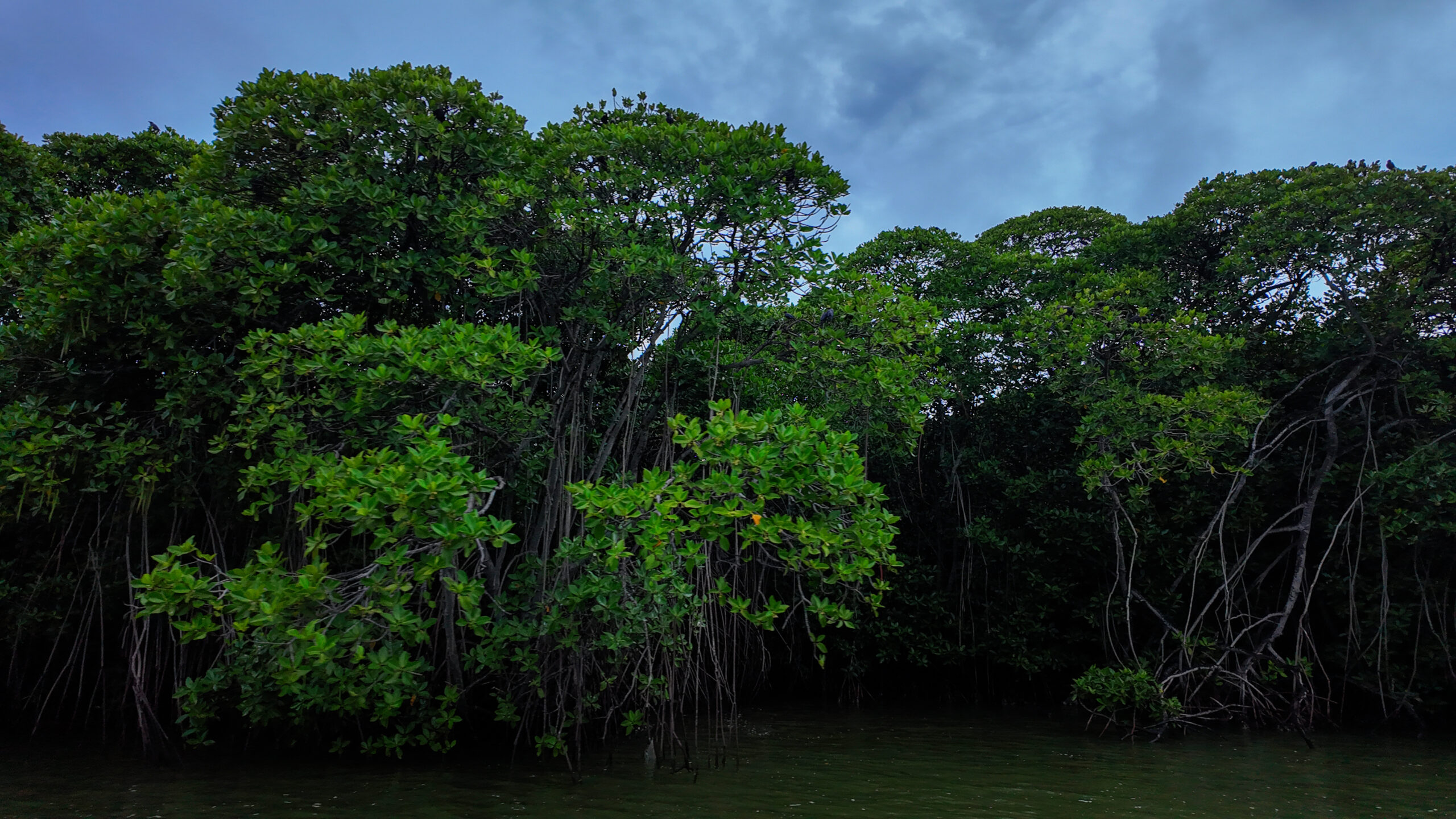
Glide into Negombo Lagoon by boat and you soon find yourself among green walls of mangrove trees, their tangled roots rising out of the water. These forests are one of the most important habitats on Sri Lanka’s west coast, and the best way to see them is from the water. Here is what makes them special, what lives there and how to visit.

In this guide
Negombo Lagoon in numbers
- The lagoon covers about 32 km² and is around 12 km long from north to south.
- It is very shallow, with an average depth of only about 1.2 metres.
- It opens to the Indian Ocean at its northern end, right beside Negombo town.
- Fresh water flows in from the Dandugam Oya and Ja-Ela rivers, mixing with sea water to create brackish conditions that mangroves love.
- Scientists have recorded around 29 mangrove species around the lagoon, 18 of them “true” mangroves.
To the south, the lagoon joins the Muthurajawela Marsh, together forming one of the largest coastal wetlands in Sri Lanka.
What is a mangrove?
Mangroves are trees and shrubs that grow where the land meets the sea, in salty or brackish water that would kill most plants. They survive with clever adaptations: stilt roots that hold them up in soft mud, breathing roots that poke up through the water, and leaves that can get rid of excess salt. Around Negombo you will see species such as red mangroves (Rhizophora), with their arching stilt roots, and grey mangroves (Avicennia).

Why the mangroves matter
- Fish and shrimp nursery. The sheltered roots are a safe place for young fish, prawns and crabs to grow. Many of the fish, prawns and crabs sold at the Negombo fish market depend on the lagoon at some stage of their lives.
- Coastal protection. Mangroves slow down waves and storm surges and hold the shoreline together.
- Clean water. Their roots trap sediment and filter the water flowing into the lagoon.
- Wildlife habitat. Birds roost and nest in the branches, and reptiles hunt among the roots.
- Local livelihoods. Fishing families around the lagoon rely on a healthy mangrove ecosystem for their income.
Wildlife you might see
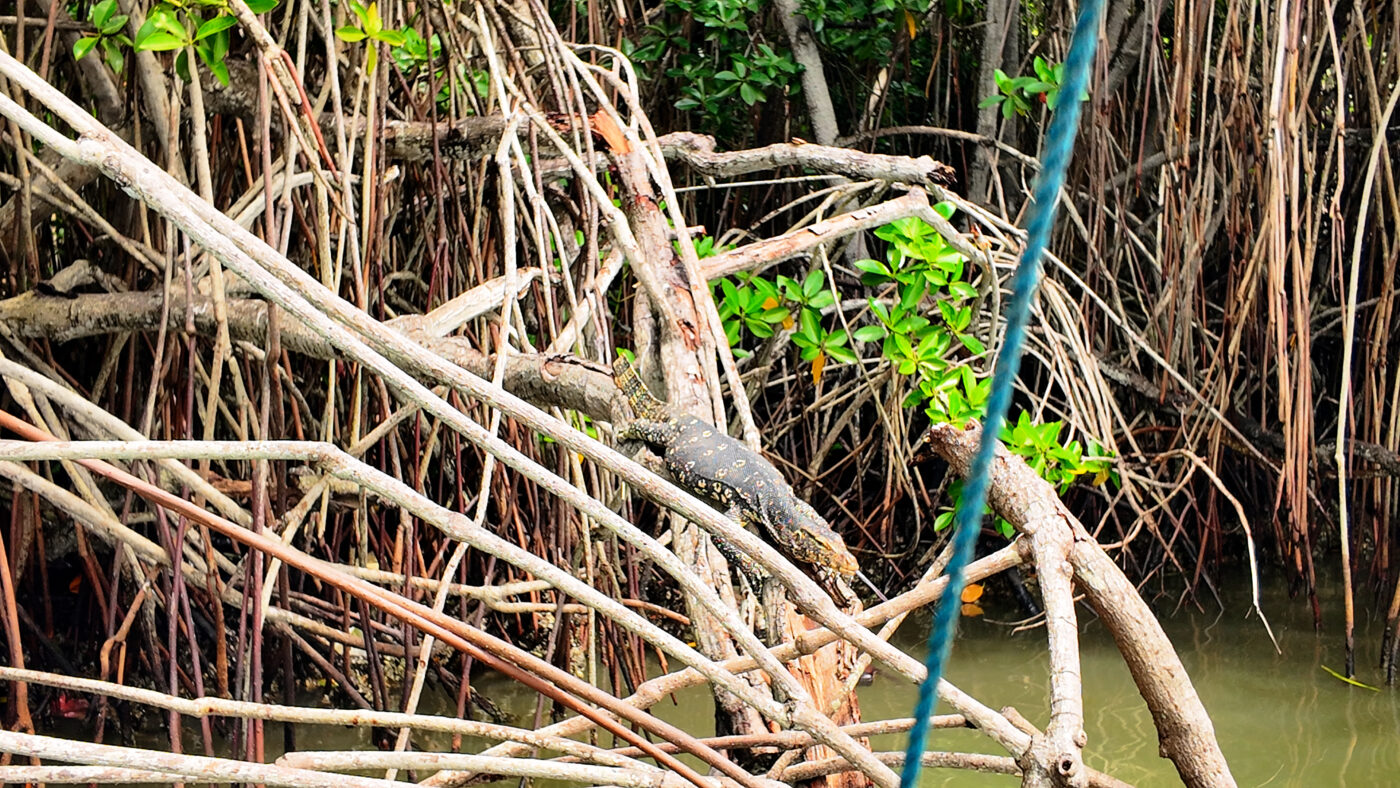
Look closely at the roots and branches as your boat drifts past. Our guests often spot water monitor lizards resting on the roots, as well as herons, egrets, kingfishers and cormorants. Crabs scuttle over the mud at low tide, and the monkeys of Monkey Island live among the trees too.

How to see the mangroves
The easiest way is on a guided boat tour. All of our tours pass through the mangrove forest, and our guides slow down so you can take photos and look for wildlife:
- Negombo Lagoon Boat Tour: private, so you can spend longer in the mangroves.
- Monkey Island Boat Tour: from $20 per person, with morning departures when birds are most active.
- Negombo Sunset Boat Tour: the mangroves glow in the evening light.

Tips for visiting
- Come in the early morning or late afternoon for cooler air, softer light and more wildlife.
- Bring sun cream, a hat and insect repellent.
- Keep your voice low near the trees so you do not scare the birds.
- Never feed or touch wildlife, and take all rubbish back with you.
Frequently asked questions
Where can I see mangroves in Negombo?
On Negombo Lagoon, especially around its small islands. A boat tour is the best way to see them.
How many mangrove species are there in Negombo Lagoon?
Around 29 mangrove species have been recorded around the lagoon, including 18 true mangrove species.
Are there crocodiles in the mangroves?
The animals our guests usually see are water monitor lizards, which look a little like small crocodiles but are harmless if left alone.
Is a mangrove boat tour suitable for children?
Yes. The water is calm and shallow, and all our boats carry life jackets for every guest.

Written by
Nalin Fernando
Nalin is the founder of Boat Tours Sri Lanka, a Negombo-based social enterprise that runs boat tours on the Negombo Lagoon with local guides. Nalin plans the tour routes and writes these guides from first-hand time on the lagoon, in the mangroves and around Negombo town.