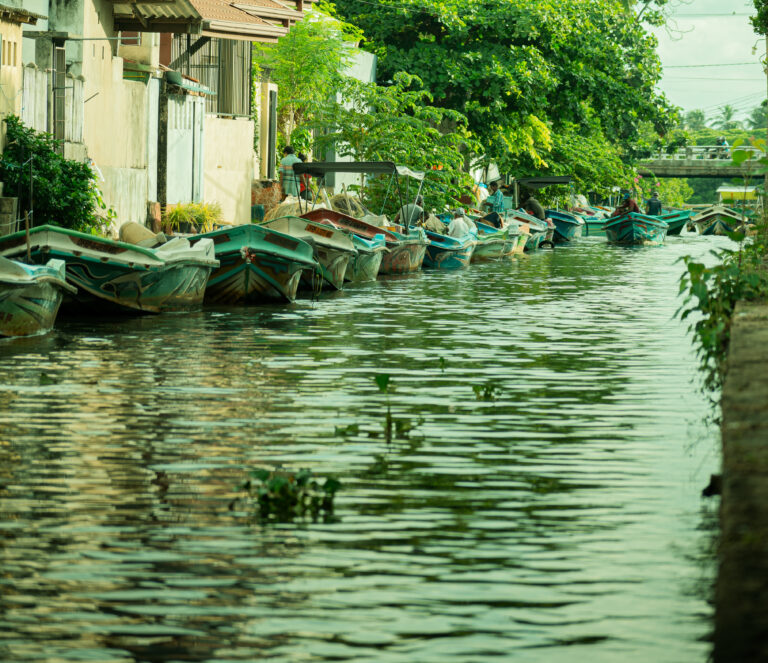
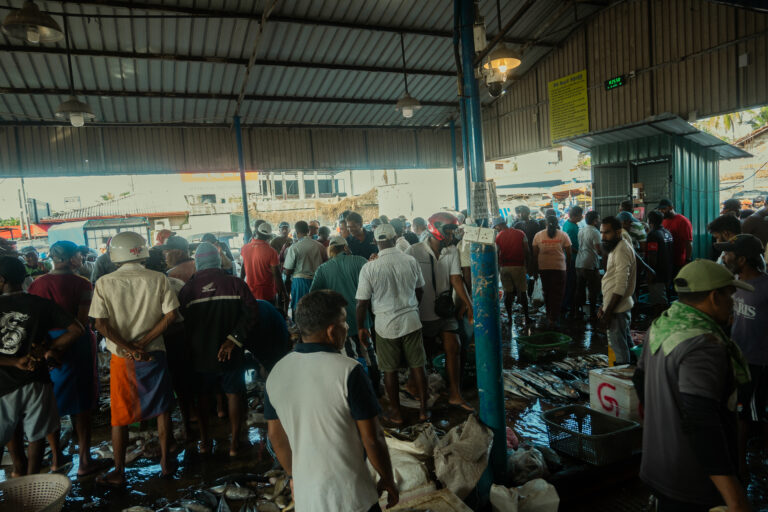
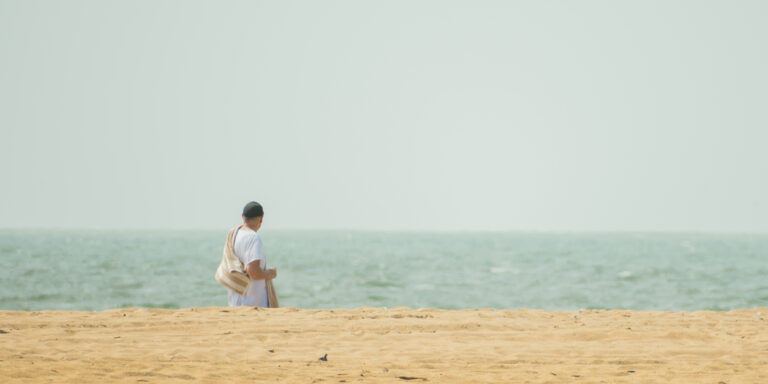
Walk along the beach near the Negombo fish market on a sunny morning and you will find rows and rows of fish laid out on mats, drying in the sun. This is dry fish making, one of Negombo’s oldest trades and a fascinating, if smelly, sight. Here is how it works and how to see it respectfully.
In this guide
What is dry fish?
Dry fish (karawala in Sinhala) is fish preserved with salt and sunshine. It keeps for weeks without a fridge and is a staple in Sri Lankan kitchens, usually fried with onions and chilli or cooked into a curry. Negombo is one of the country’s main dry fish centres, and a 2022 study surveyed more than 40 processing centres in the area.

How it is made
| Step | What happens |
|---|---|
| 1. Clean | The head and guts are removed and the fish is washed. |
| 2. Salt | Fish are salted, often soaked in brine tanks. Larger fish are split open. |
| 3. Rinse | The salted fish are rinsed again. |
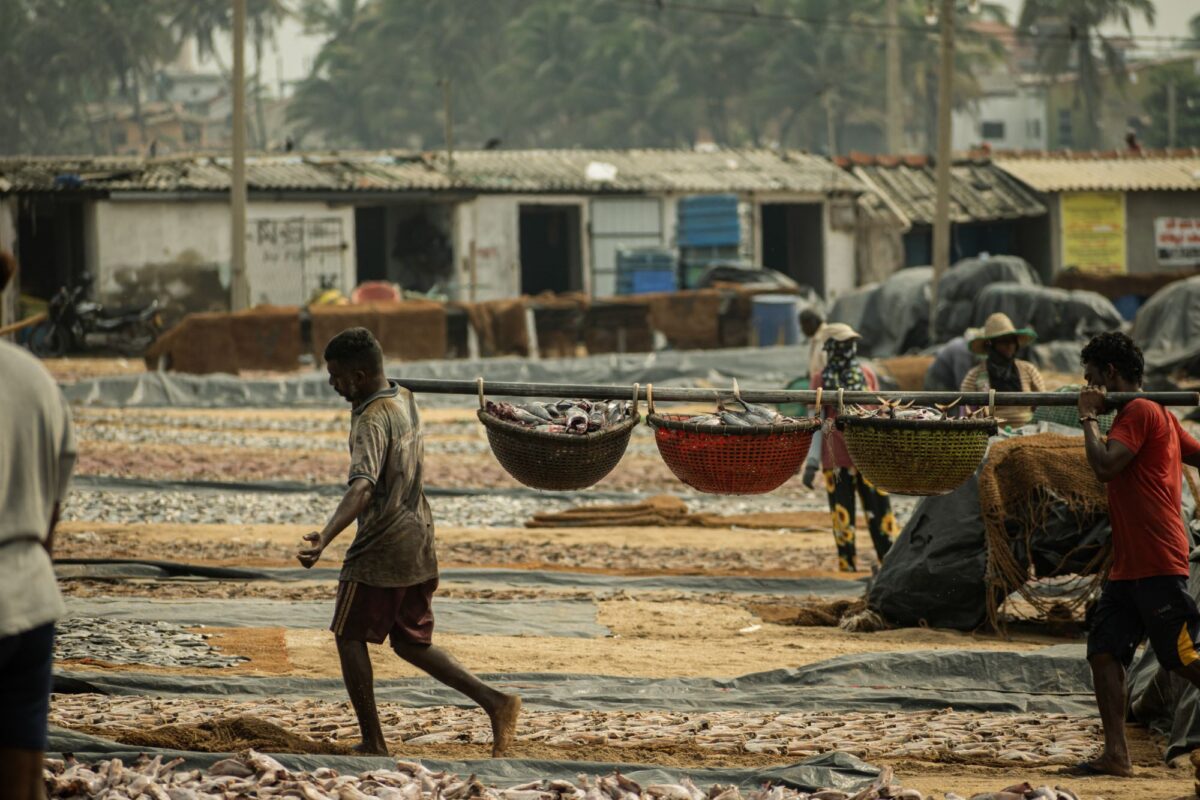
| 4. Dry | The fish are laid out on mats or sacks on the sand and turned in the sun. |
| 5. Pack | Once dry, the fish are sorted, packed and sold. |
Small fish such as anchovies and sardines can dry in about 6–8 hours. Larger fish can take 2–3 days of sun.

Which fish are dried?
Many kinds. Common ones include sardines, anchovies, scad, Indian mackerel, skipjack tuna, mahi-mahi, flying fish, barracuda and catfish.

Where to see it in Negombo
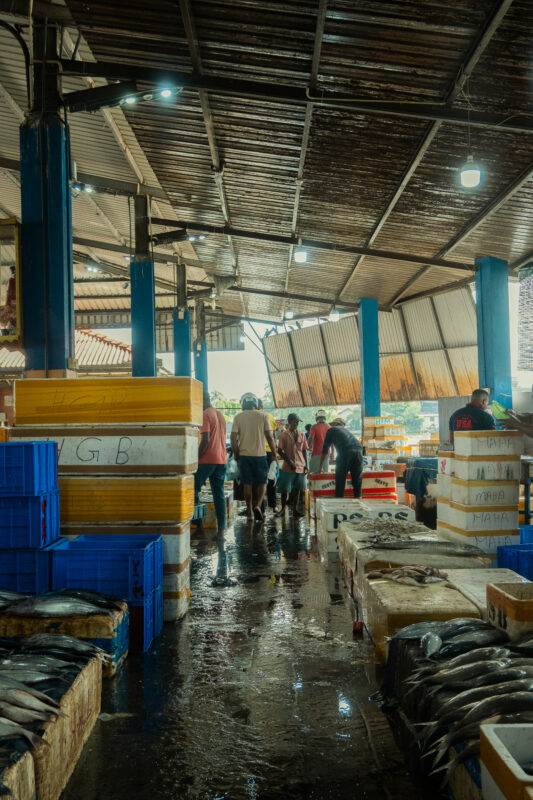
Most of the drying happens on the beach beside the Negombo fish market (Lellama), near the lagoon mouth and the old Dutch Fort. Go in the morning, roughly 9am to noon, when the fish are laid out. Production carries on all year, but you will see the most on sunny days. Avoid rainy days and Sundays, when the markets close.


Who does the work?
Dry fish making is often a family business, and women play a big role in salting, laying out and turning the fish. It is especially important during the monsoon months, when fresh fish is scarce and dried fish provides income. Read more in a day in the life of a Negombo fisherman.

Visiting tips
- Ask before taking close-up photos of people working.
- Do not walk on the mats or touch the fish.
- Wear closed shoes or sandals you do not mind getting sandy and fishy.
- The smell is strong. Most visitors find it part of the experience.
- Want to buy some? Ask for a small packet; it makes a very local souvenir (check your home country’s food import rules).


Combine your visit
Start at the fish market auction before 8am, walk over to the drying beach, then cool off on the water with our 10:30 AM Monkey Island Boat Tour. For more food ideas, see our Negombo seafood guide.
Frequently asked questions
Where can I see dry fish being made in Negombo?
On the beach next to the Negombo fish market (Lellama), near the lagoon mouth.
What time is best?
In the morning, roughly 9am to noon, on a sunny day.
How long does it take to dry fish?
About 6–8 hours for small fish, and 2–3 days for larger fish.
Is it open on Sundays?
The fish markets close on Sundays, so there is much less activity.

Written by
Nalin Fernando
Nalin is the founder of Boat Tours Sri Lanka, a Negombo-based social enterprise that runs boat tours on the Negombo Lagoon with local guides. Nalin plans the tour routes and writes these guides from first-hand time on the lagoon, in the mangroves and around Negombo town.