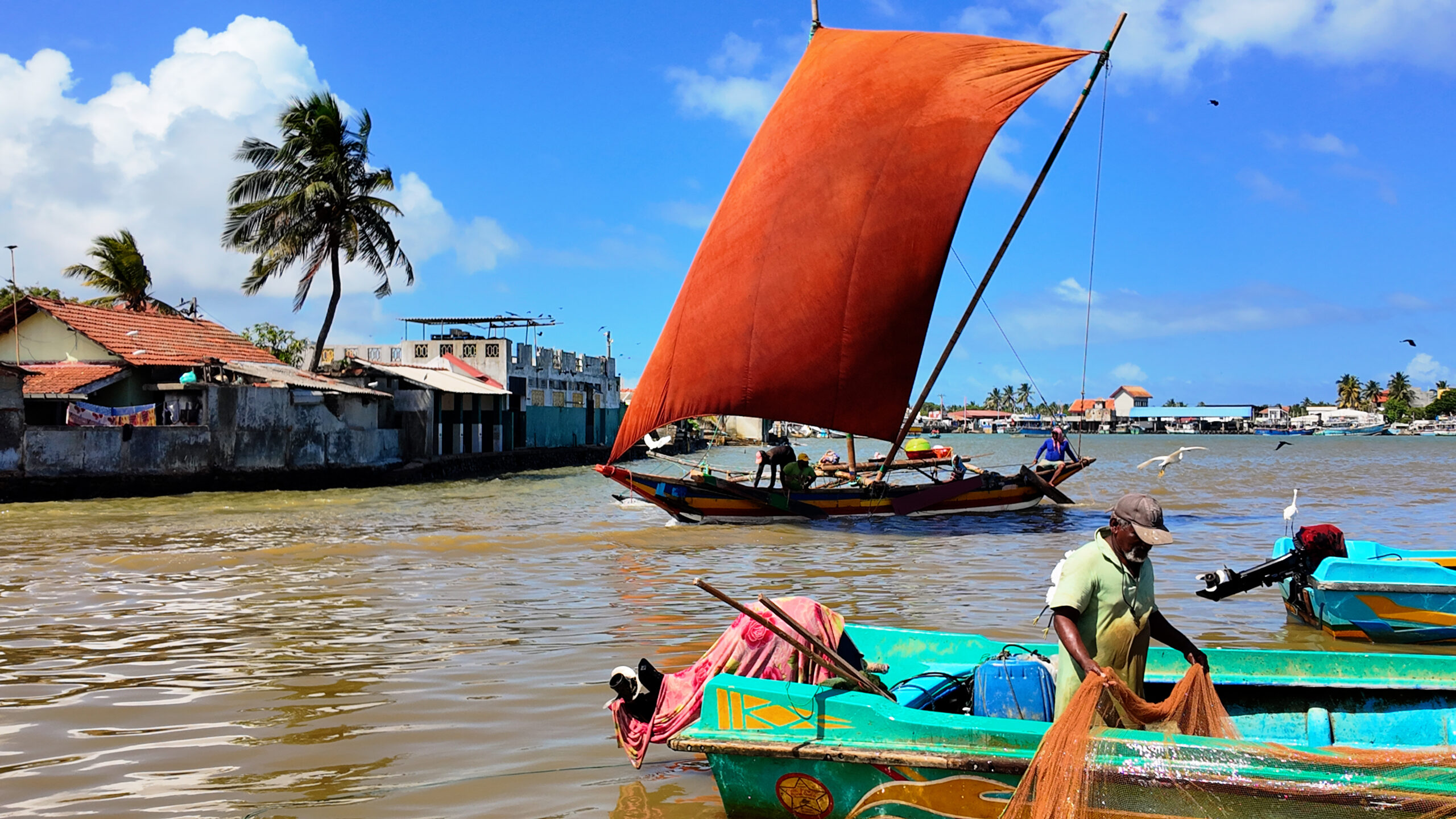
Look out to sea from Negombo and you may spot a boat that looks like it has sailed straight out of history: a slim wooden hull, a single float off to one side and a big, rust-brown sail. This is the oruwa, Sri Lanka’s traditional outrigger canoe, and Negombo is one of the best places in the country to see it.

In this guide
How an oruwa is built
- A dugout hull. The main hull is carved from a single log. Traditionally fishermen preferred jak (kos) and other local hardwoods, and mango wood is now widely used.
- Sewn planks. Planks are added along the top to raise the sides. They are sewn on with coconut-fibre (coir) rope, and the whole boat is lashed and sewn together, with very few nails or bolts.
- The outrigger. Two long wooden booms connect the hull to a float carved from light wood.
- The sail. Traditional sails are thin cotton, tanned a rich brown colour.
How it sails
The oruwa is a clever design. Its outrigger works as a counterweight rather than a raft, so the boat sails with the float on the side the wind is coming from. Instead of turning around, the crew simply swap the ends of the boat, so either end can become the bow. In light winds, fishermen sometimes splash seawater onto the cotton sail to make it catch more wind.
Oruwas in Negombo
Negombo’s oruwas are among the largest in Sri Lanka, often 10–12 metres long. They have traditionally been used for fishing close to the shore, including prawn fishing with nets dragged along the sea bed. Since the 1980s many have been rebuilt in fibreglass, copying the shape of the wooden boats, and today engines have replaced sails on many fishing boats. But the oruwa is still part of Negombo life, and seeing one under sail at sunrise or sunset is unforgettable.

Where to see oruwas
- From the beach early in the morning or late afternoon, when boats head out or return.
- Near the lagoon mouth and the fish market, where boats come and go.
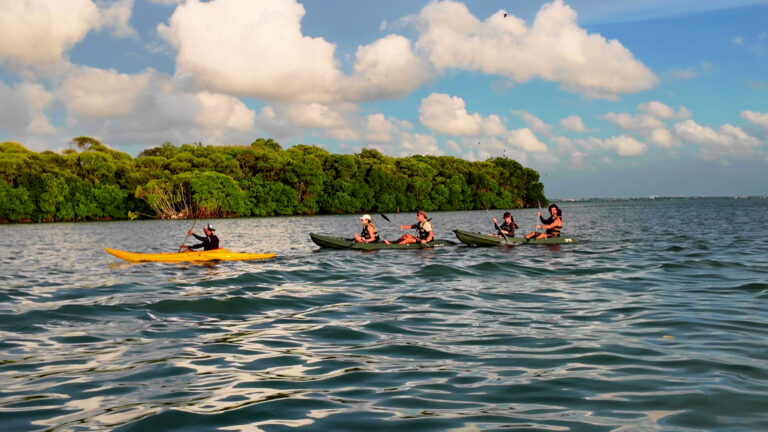
- From the water on our Negombo Lagoon Boat Tour or Sunset Boat Tour, which pass the lagoon mouth and fishing villages.
A boat with a long history
Outrigger canoes have sailed the Indian Ocean for many centuries, and boats like the oruwa connect Sri Lanka with a seafaring tradition shared across South and Southeast Asia. Every hand-sewn oruwa represents knowledge passed down through generations of fishing families.
Learn more about the people who sail them in our post on a day in the life of a Negombo fisherman.
Frequently asked questions
What is an oruwa?
A traditional Sri Lankan outrigger canoe with a dugout hull, an outrigger float and a large sail.
What is an oruwa made of?
Traditionally a hull carved from one log, with planks sewn on using coconut-fibre rope. Many modern versions are fibreglass.
Where can I see an oruwa in Negombo?
On the beach and near the lagoon mouth, especially early in the morning or at sunset, or from a boat tour on the lagoon.
Are oruwas still used for fishing?
Yes, though many are now fibreglass and some use engines instead of sails.

Written by
Nalin Fernando
Nalin is the founder of Boat Tours Sri Lanka, a Negombo-based social enterprise that runs boat tours on the Negombo Lagoon with local guides. Nalin plans the tour routes and writes these guides from first-hand time on the lagoon, in the mangroves and around Negombo town.