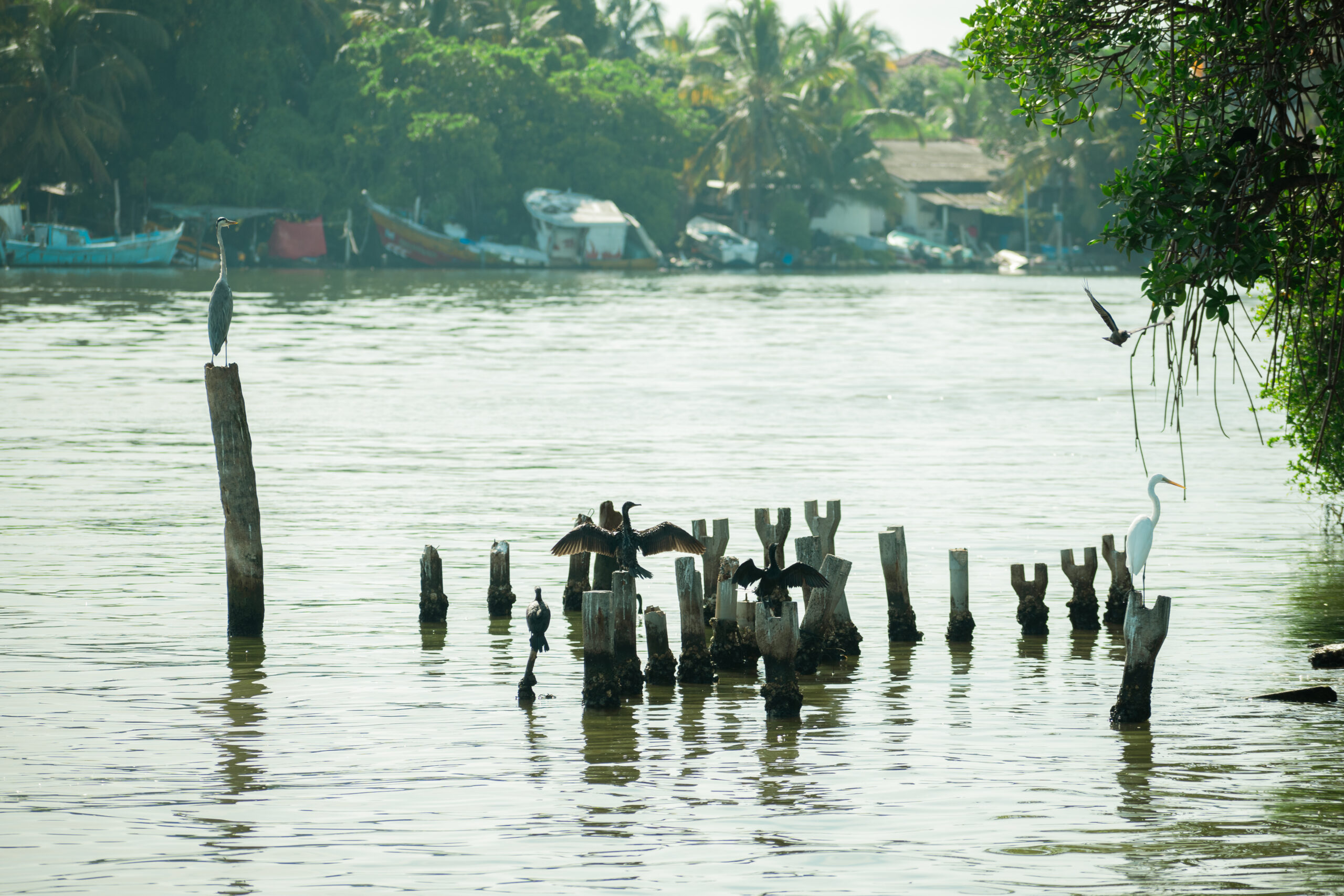
Just south of Negombo Lagoon lies Muthurajawela Marsh, one of the most important wetlands in Sri Lanka and a surprising slice of wilderness only half an hour from the airport. Crocodiles, water monitors and more than 100 species of birds live here. This guide explains what Muthurajawela is, what you might see and how it compares with a boat trip on Negombo Lagoon.

In this guide
Muthurajawela at a glance
| Location | Southern end of Negombo Lagoon, about 30 km north of Colombo |
| Size | About 3,068 hectares |
| Protection | The northern part (1,777 ha) was declared a Wetland Sanctuary in 1996 |
| Wildlife recorded | About 192 plant species, 209 animal species and 102 bird species |
| Name meaning | “Swamp of royal treasure” |
Muthurajawela is Sri Lanka’s largest saline coastal peat bog and is thought to be around 7,000 years old. Together with Negombo Lagoon it forms one connected wetland system, so the water, fish and birds move freely between the two.
Wildlife you might see
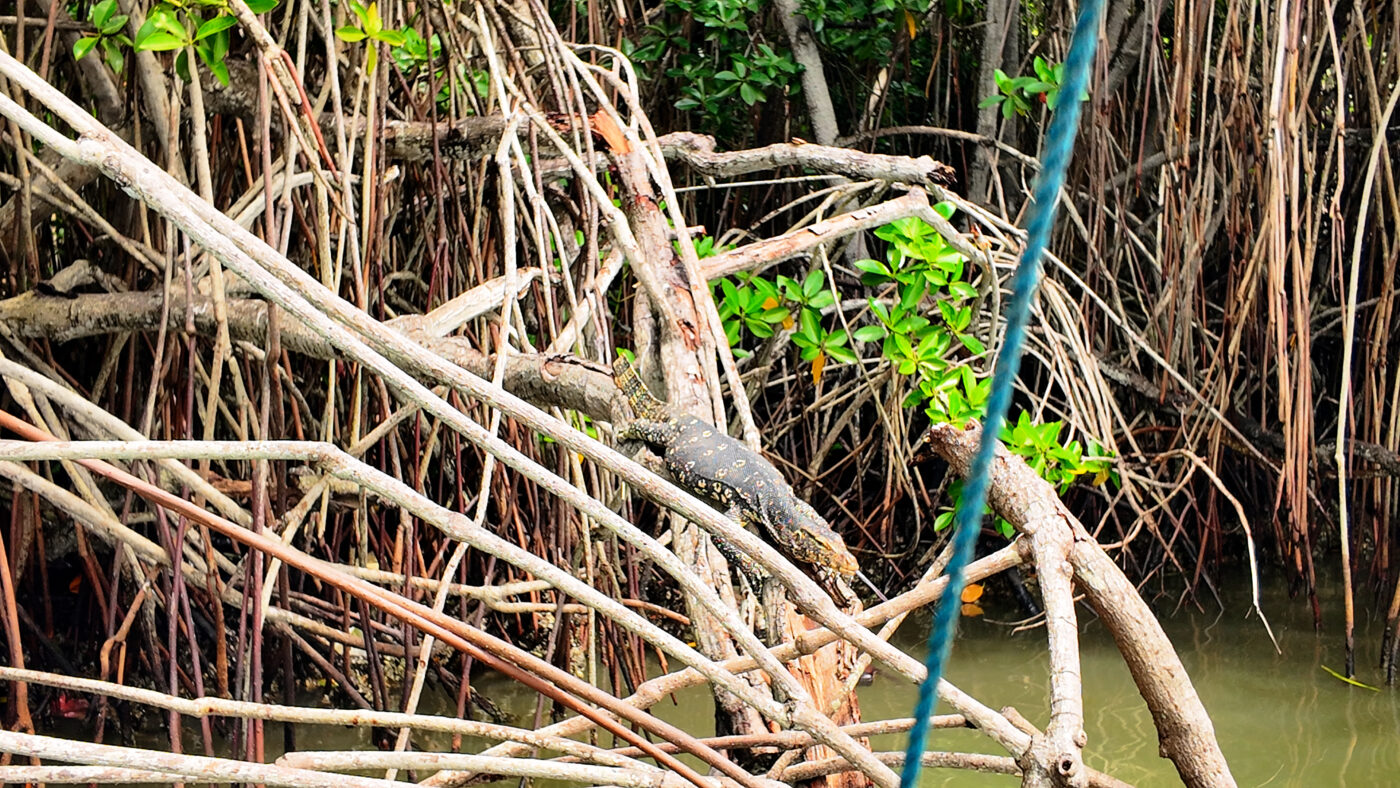
- Reptiles: saltwater crocodiles and large water monitor lizards.
- Birds: purple herons, egrets, kingfishers, cormorants and birds of prey. Migrant birds arrive roughly from November to March.
- Mammals: macaque monkeys, and if you are very lucky, otters. The rare slender loris has also been recorded here.
- Plants: mangroves, reeds and marsh vegetation.
How to visit Muthurajawela
The Muthurajawela Marsh Centre (visitor centre) has displays about the wetland and staff who guide visitors. Boat trips through the marsh typically last around 1.5 to 2 hours. As with any wildlife trip, early morning or late afternoon is best, when it is cooler and the animals are more active. Opening times and prices change, so check locally before you go.
Muthurajawela or Negombo Lagoon?
Both are part of the same wetland, and both are rewarding. A quick comparison:
| Muthurajawela Marsh | Negombo Lagoon boat tour | |
|---|---|---|
| Landscape | Narrow channels, reeds and marsh | Open lagoon, mangrove islands, canal and fishing villages |
| Highlights | Crocodiles and marsh birds | Monkey Island, mangroves, birds, shallow water walking, local life |
| Getting there | About 30 minutes south of Negombo | Starts in Negombo town, on the canal |
| Best for | Dedicated wildlife watchers | Families, couples and first-time visitors |
If you have time, do both. If you only have time for one, our Negombo Lagoon Boat Tour or Monkey Island Boat Tour gives you mangroves, wildlife and local fishing life in a single trip, right from Negombo.

Tips for your visit
- Bring binoculars, a hat, sun cream and insect repellent.
- Wear light, long clothing in the early morning and evening to avoid mosquitoes.
- Stay in the boat and keep a safe distance from crocodiles.
- Never feed wildlife.
Learn more about the habitat in our posts on the mangroves of Negombo Lagoon and birdwatching in Negombo Lagoon.
Frequently asked questions
Where is Muthurajawela Marsh?
At the southern end of Negombo Lagoon, about 30 km north of Colombo and around 30 minutes from Bandaranaike International Airport.
Are there crocodiles in Muthurajawela?
Yes, saltwater crocodiles live in the marsh, along with water monitor lizards.
How many bird species live in Muthurajawela?
Around 102 bird species have been recorded.
Is Muthurajawela part of Negombo Lagoon?
They are separate areas but form one connected wetland system.

Written by
Nalin Fernando
Nalin is the founder of Boat Tours Sri Lanka, a Negombo-based social enterprise that runs boat tours on the Negombo Lagoon with local guides. Nalin plans the tour routes and writes these guides from first-hand time on the lagoon, in the mangroves and around Negombo town.