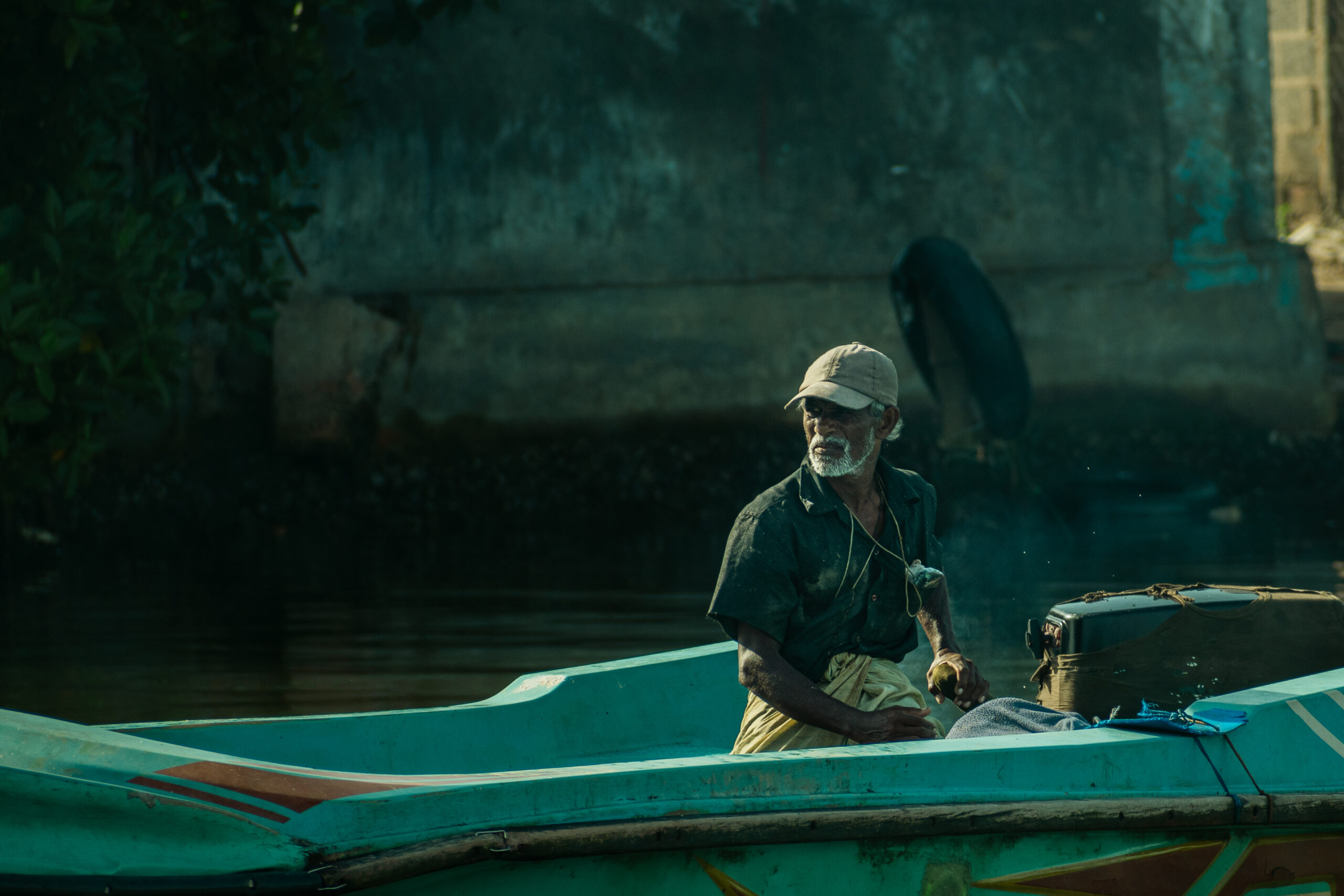
Fishing is the heartbeat of Negombo. Long before the tourists wake up, fishermen are already at sea, and by the time you have breakfast their catch is being auctioned at the market. As a social enterprise working with local boat-owning fishing families, we want to share what daily life looks like for the people who make Negombo what it is.

In this guide
A fishing community with deep roots
Negombo’s fishing families have worked these waters for generations. Many belong to the Karava community, traditionally a seafaring people, and many converted to Catholicism during the Portuguese era. Today the wider Negombo area is home to a large fishing community, and faith remains part of daily life, from prayers before going to sea to Sunday Mass.
A typical day
| Time | What happens |
|---|---|
| Before dawn | Crews prepare nets and fuel and head out to sea, or into the lagoon in smaller boats. |
| Early morning | Boats return to the shore and the harbour near the lagoon mouth. |
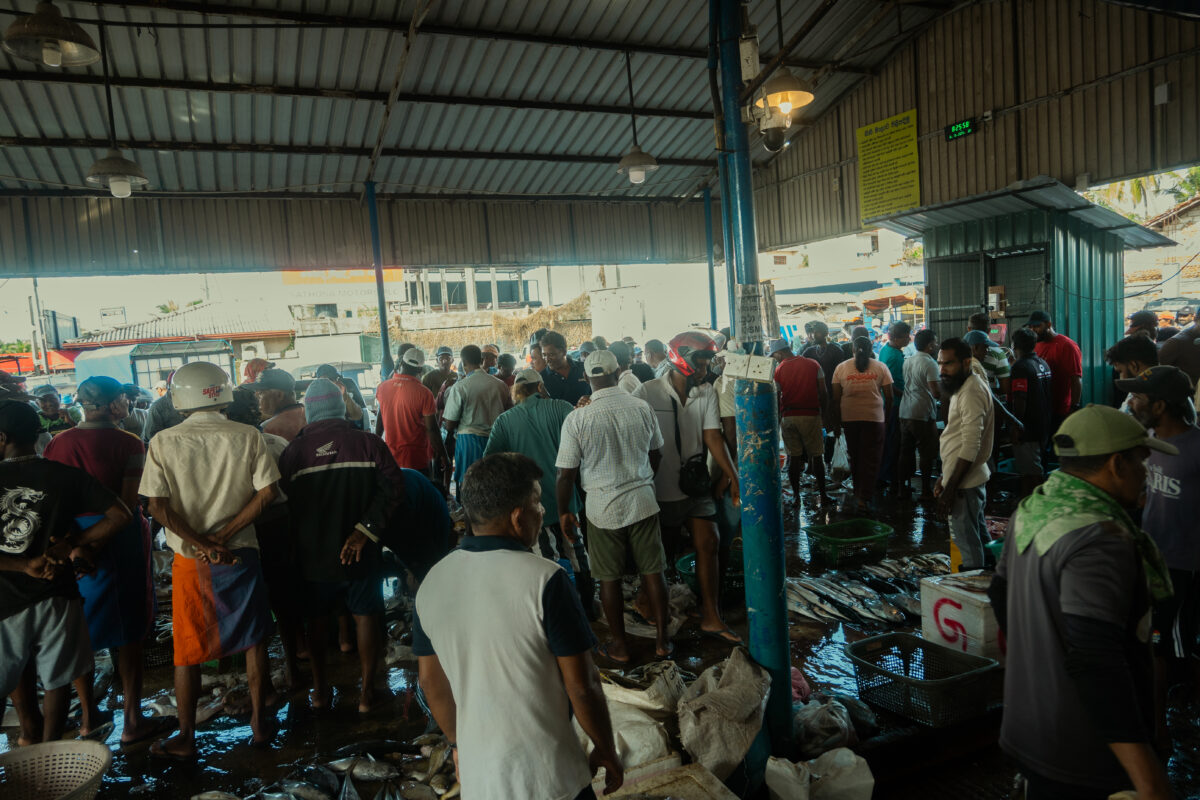
| Morning | The catch is unloaded and sold at the fish market auction. |
| Late morning | Nets are cleaned, checked and mended on the beach. |
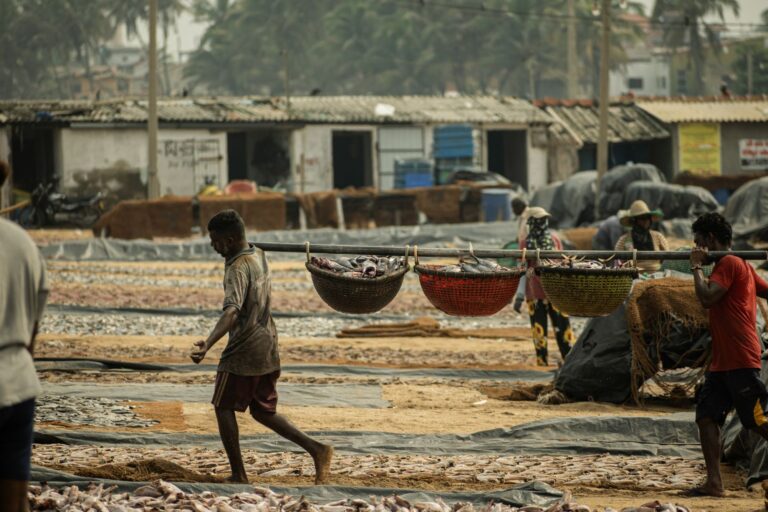
| Afternoon | Rest, boat repairs and family time. Some fish is salted and dried. |
| Evening | Some crews go out again for night fishing. |

Sea fishing and lagoon fishing
Fishing changes with the seasons. The main sea-fishing season runs from about September to April, when the sea is calmer. During the south-west monsoon, roughly May to August, the sea is often too rough for small boats, and many fishermen work in the sheltered lagoon instead, catching prawns, crabs and fish.
The boats
- Oruwa: the traditional outrigger sailing canoe. Read more in our post on the oruwa.
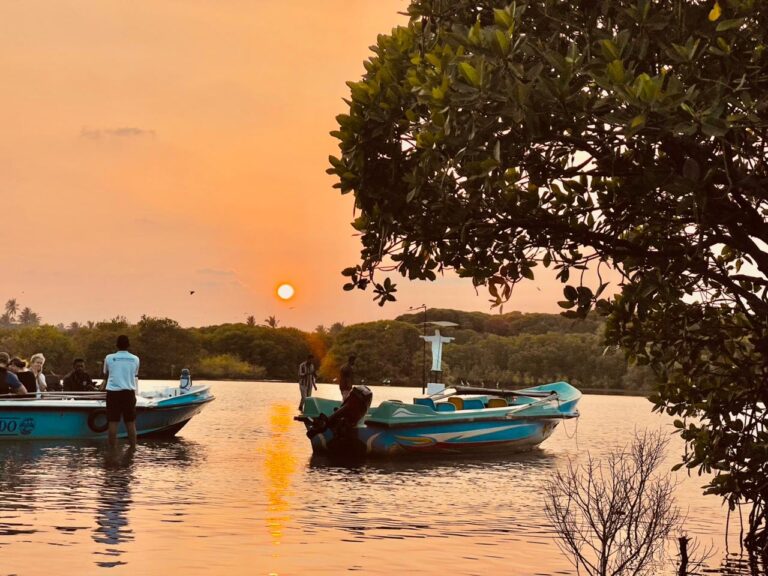
- Small fibreglass boats with outboard engines, now the most common boats on the lagoon and close to shore.
- Larger multi-day boats that go further out to sea from the harbour.
Beach seine (madel) fishing
On some beaches you may see madel fishing: a boat carries a huge net out to sea in a wide loop, then a team of men on the beach haul it in by hand from both ends. It is hard, rhythmic work and a remarkable sight. This tradition is declining because of rising costs, smaller catches and young people choosing other jobs.
Challenges facing fishing families
- Rising fuel and equipment costs
- Smaller catches and changing seas
- Pollution, including the 2021 X-Press Pearl ship disaster off the west coast
- Young people leaving fishing for other work
How tourism can help
Responsible tourism can give fishing families a second income. At Boat Tours Sri Lanka, every booking supports a local boat-owning fishing family in Negombo. On our Negombo Lagoon Boat Tour you pass traditional fishing villages and see fishermen at work, guided by people who know the lagoon best.
Seeing it for yourself
- Visit the fish market early in the morning (closed on Sundays).
- See dry fish being made on the beach.
- Always ask before photographing people at work, and buy something if you can.
Frequently asked questions
When is the fishing season in Negombo?
The main sea-fishing season is about September to April. During the monsoon, many fishermen work in the lagoon.
Do fishermen go out on Sundays?
Many do not, and the fish markets are closed on Sundays.
Can I see fishermen at work?
Yes. Visit the fish market early in the morning or join a lagoon boat tour that passes fishing villages.

Written by
Nalin Fernando
Nalin is the founder of Boat Tours Sri Lanka, a Negombo-based social enterprise that runs boat tours on the Negombo Lagoon with local guides. Nalin plans the tour routes and writes these guides from first-hand time on the lagoon, in the mangroves and around Negombo town.