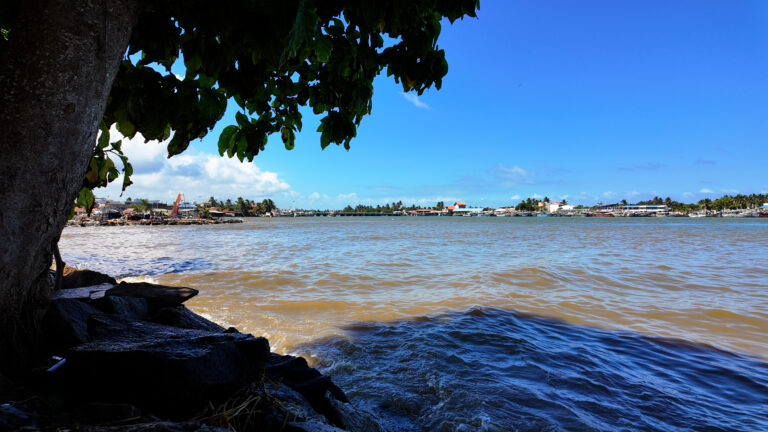
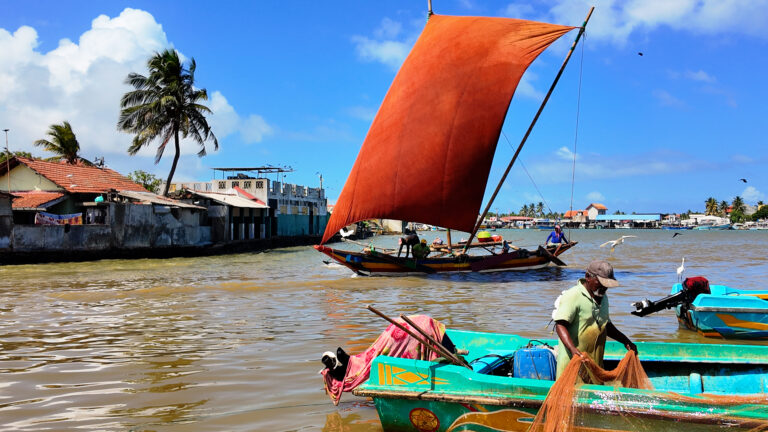
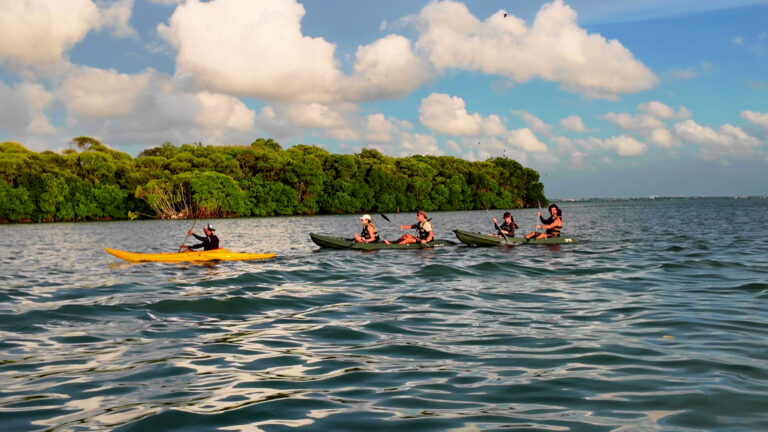
Negombo Lagoon is not only about monkeys and mangroves. Its mudflats, shallow water and mangrove islands make it one of the easiest places near Colombo to enjoy birdwatching. More than 100 bird species have been recorded in the wider Negombo Lagoon and Muthurajawela wetland, and you do not need to be an expert to enjoy them. Here are the birds you are most likely to see from a boat, and how to make the most of your trip.

In this guide
Why Negombo Lagoon is good for birds
- Shallow water. The lagoon averages only about 1.2 metres deep, so wading birds can feed almost everywhere.
- Mudflats. At low tide, sand and mud banks appear, full of small crabs, worms and fish.
- Mangrove islands. Safe places for birds to roost and nest, away from people.
- Rich fishing. The same fish and prawns that feed Negombo’s fishermen feed its birds too.

Birds to look out for
Herons and egrets
The easiest birds to spot. Little egrets are everywhere, often in large numbers, along with great and intermediate (medium) egrets. Look for the shy Indian pond heron, which looks brown until it flies and flashes white wings, and the tall purple heron and grey heron hunting at the water’s edge. In the evening you may see black-crowned night herons leaving their roosts.


Cormorants and darters
Little and Indian cormorants dive for fish and then perch with their wings spread out to dry. The Oriental darter, sometimes called the snakebird, swims with only its long, thin neck above the water.

Kingfishers
Keep watching the branches over the water. The white-throated kingfisher, with its bright blue back and red bill, is common, and the large stork-billed kingfisher can be seen in quieter mangrove channels.

Birds of prey
The chestnut-and-white Brahminy kite circles over the lagoon almost every day. If you are lucky, you may also spot the powerful white-bellied sea eagle.
Storks, ibises and pelicans
Look for the Asian openbill, a stork with a curious gap in its bill for eating snails, the black-headed ibis probing the mud, and the spot-billed pelican, a large bird that sometimes visits the lagoon.
Terns and shorebirds
Whiskered terns hover and dip over the open water, and migrant shorebirds such as the whimbrel, with its long curved bill, feed on the mudflats, especially between about November and April.

Best time for birdwatching
- Time of day: early morning is best. Birds are most active and the light is soft. Our 8:00 AM tour is ideal. Late afternoon is also good as birds return to roost.
- Season: birds can be seen all year. From about November to April, migrant birds from the north add to the variety.
- Tide: low tide exposes more mudflats, which brings in the wading birds.
Tips for birdwatching from a boat
- Bring binoculars and a camera with a zoom lens if you have one.
- Wear neutral colours and keep your voice low as you approach the mangroves.
- Ask your guide to slow down or stop: our local guides know where the birds usually feed.
- A free app such as Merlin Bird ID or eBird helps you identify what you see.
- Never chase or disturb nesting birds.

Which tour is best for birdwatching?
Our private Negombo Lagoon Boat Tour is best for keen birdwatchers, because you choose the start time and can spend longer at the mudflats and mangroves. For a budget option, join the 8:00 AM Monkey Island Boat Tour, or see birds heading to roost on the Sunset Boat Tour. Not sure? Read our guide on which Negombo boat tour to choose, and learn more about the habitat in our post on the mangroves of Negombo Lagoon.

Frequently asked questions
What birds can I see in Negombo Lagoon?
Common sightings include little egrets, great egrets, Indian pond herons, purple herons, little and Indian cormorants, Oriental darters, white-throated kingfishers, Brahminy kites and whiskered terns.
When is the best time for birdwatching in Negombo?
Early morning, all year round. From about November to April, migrant birds add even more variety.
Do I need binoculars?
They help a lot, but you can still see many birds clearly without them, as the boat can get quite close.
Is Muthurajawela good for birds too?
Yes. Muthurajawela Marsh, at the southern end of the lagoon, is another excellent wetland for birds.

Written by
Nalin Fernando
Nalin is the founder of Boat Tours Sri Lanka, a Negombo-based social enterprise that runs boat tours on the Negombo Lagoon with local guides. Nalin plans the tour routes and writes these guides from first-hand time on the lagoon, in the mangroves and around Negombo town.